Three Decades of Evolving Web Development Expertise
I have been developing websites since 1996 across freelance, agency and in-house environments. That background includes both legacy systems and modern LAMP-stack development, so I can evaluate existing code pragmatically instead of assuming the newest approach is automatically the right one.
1996-Present
Web Design & Development for Businesses and Agencies
I partner with local and remote businesses and digital agencies to design and develop reliable, scalable websites that combine custom development, technical SEO, and performance optimization to enhance user experiences and deliver measurable results.
Real-World Experience with Established Web Agencies
The following web agencies have employed me in full-time roles throughout my career, providing decades of hands-on experience in professional web design, full-stack development, technical SEO, and delivering scalable, high-performance websites for diverse clients and industries.
Full-StackFront-end, back-end, databases,
hosting considerations and implementation strategy.
Development-LedDesign, SEO and conversion
decisions implemented through maintainable code.
Clear Scope • Practical Options
Hourly help for focused work. Custom quotes for larger builds.
Everyday updates, troubleshooting and defined development blocks can be handled hourly. Larger websites, database-driven systems and custom applications are quoted after the technical scope and priorities are reviewed.
PHP & MySQL Development
Custom Code That Makes Business Websites More Capable
I build, repair, modernize and extend PHP/MySQL websites and web applications with an emphasis on dependable architecture, efficient database work, responsive interfaces and clear conversion paths.
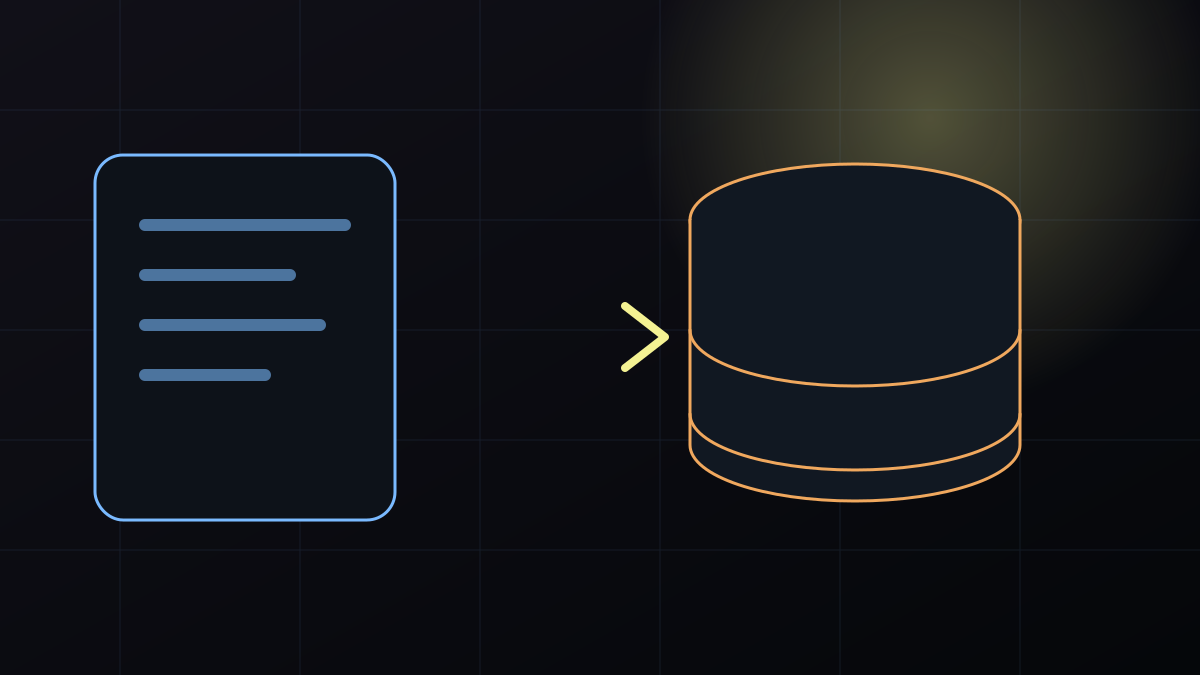
Full-Stack Work, With PHP and MySQL at the Centre
I can work on a single technical problem or take responsibility for the connected layers that make a website function as a business system.
Custom PHP
Business logic, account management, dynamic forms, APIs, third-party integrations and workflow automation tailored to specific business requirements without reliance on generic templates.
MySQL Engineering
Schema planning, normalization, indexing, query refinement and data-integrity decisions aligned with how the application actually needs to work.
Front-End Implementation
Semantic HTML, responsive CSS and practical JavaScript implementation that keep complex functionality understandable across desktop, tablet and mobile.
Performance & Security
Programming choices shaped by input validation, access control, efficient queries, predictable error handling and reduced unnecessary client-side overhead.
Modernization Without Waste
Website Repairs, Refinements & Upgrades
Improve What Works. Replace What Is Holding the Site Back.
Not every project needs a complete rebuild. Existing websites often have valuable content, search visibility, customer workflows or back-office logic worth preserving.
- Repair fragile PHP, database or front-end behaviour.
- Refactor sections that are difficult to maintain or extend.
- Add new features while preserving proven parts of the website.
- Improve responsive behaviour, accessibility and conversion paths.
- Plan phased upgrades when replacing everything at once would add unnecessary risk.
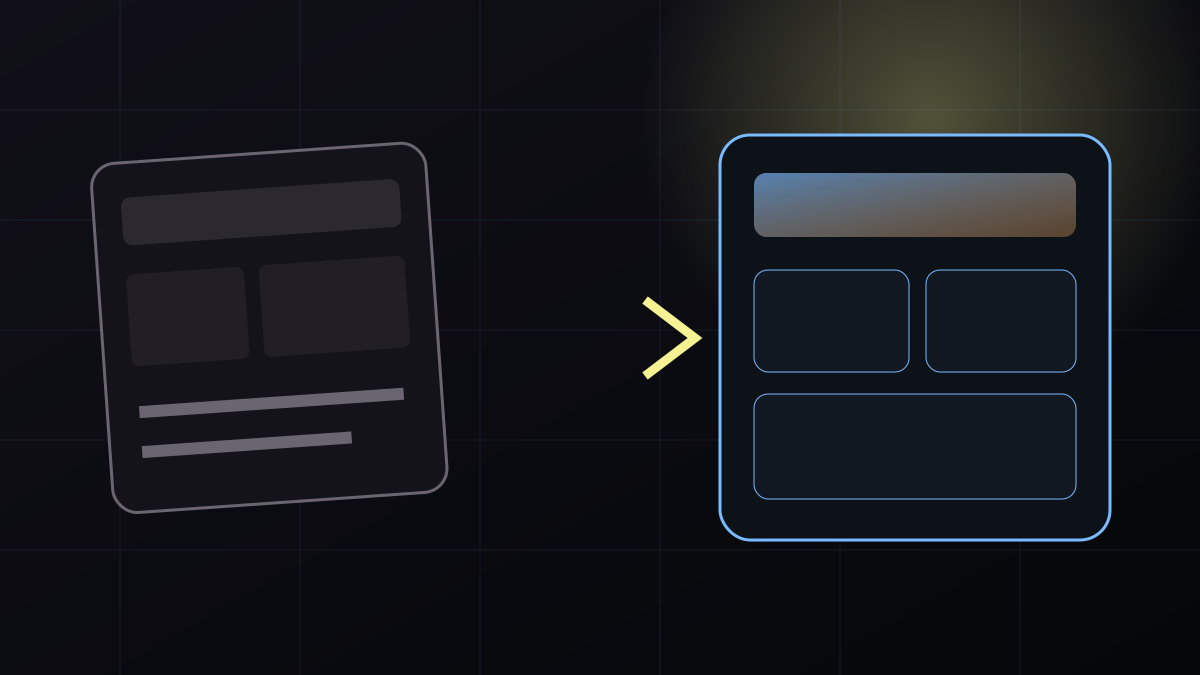
From Requirement to Release
A Development Process That Starts With the Business Problem
The most useful implementation is not necessarily the one with the most code. I first determine what needs to happen, what data is involved, which existing constraints matter and how success will be measured.
- Clarify the requirement. Define the user need, business outcome, constraints and current technical state.
- Plan the implementation. Choose the data model, application flow, responsive behaviour and integration approach.
- Build and validate. Implement in controlled stages, test expected and failure paths, and refine performance.
- Launch with continuity. Deploy with maintainability in mind and leave a practical path for future improvements.
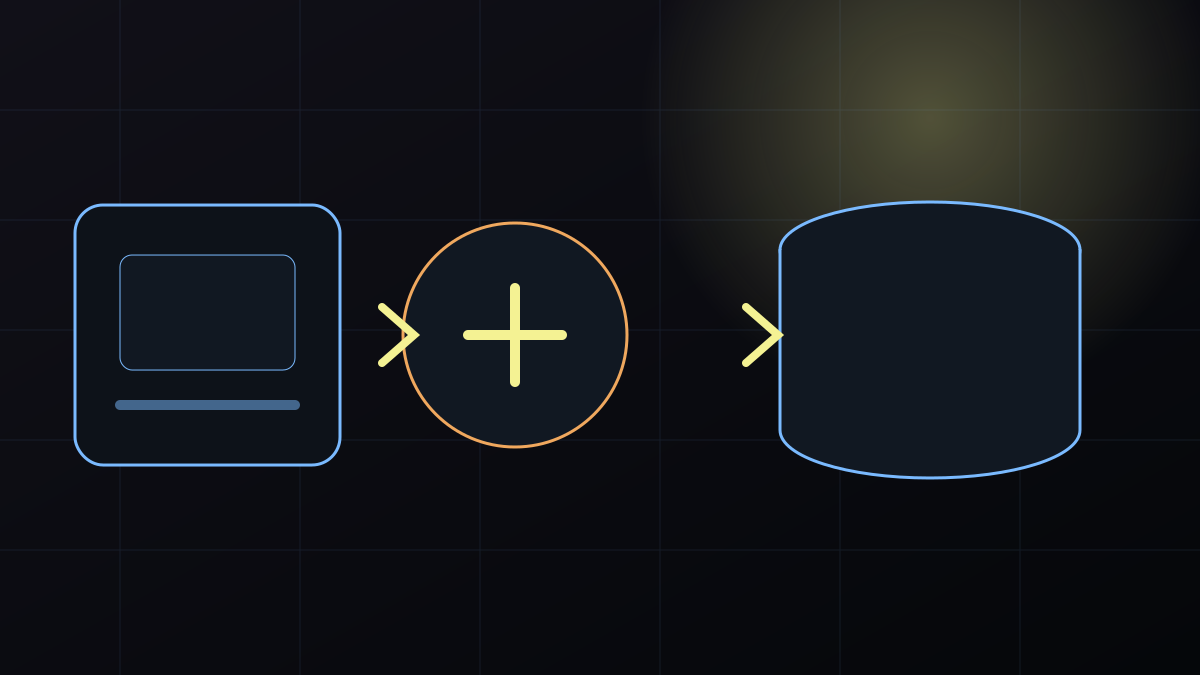
Bring the Requirement. I’ll Help Define the Practical Build.
Whether you need a targeted PHP fix, a MySQL-backed feature, a major modernization or a new custom web application, the first step is a clear discussion about scope and priorities.
Navigation
Contact Sean - located in Winnipeg, MB. Serving clients globally.
-
+1 (204) 899-7142
- North America -
Call on WhatsApp
- International -
info@seanroberts.ca
- Globally